Diving on Phu Quoc: season, where to dive and dive centres
When to dive on Phu Quoc, how the south (An Thoi archipelago) differs from the north, how to check a PADI instructor, and four dive centres on the island.
Short answer: most diving on Phu Quoc happens from November to April, in the dry season, when the sea is calmer and the water clearer. The main area is the An Thoi archipelago in the south. It has the most sites, but they close in windy weather. The north-west of the island is more sheltered but has fewer sites. Most dives are shallow, usually under 12 m, so Phu Quoc works well for a first dive or a beginner course. The VietGid directory lists four dive centres on the island; according to their pages, all of them have Russian-speaking instructors.
Diving and snorkelling: addresses and contacts Open in Telegram
Which dive centres are on Phu Quoc?
Listings checked on 10–13 November 2026 against Google Maps, PADI pages and the centres' websites. Confirm terms, trip schedules and language when you book.
| Centre | Where | What | Language and contact |
|---|---|---|---|
| Vietnam Active Phu Quoc | south, Trần Hưng Đạo, Cua Lap area | PADI 5 Star centre, branch of Vietnam Active in Nha Trang | Russian, English, Vietnamese; phone numbers on Google Maps and PADI differ — call first |
| Vietnam Explorer | south, Duong To (ấp Suối Mây) | PADI centre: courses and dives, including rebreathers | Russian, English, French, German, Vietnamese |
| Flipper Diving Club | north-west, Ong Lang, by Bai Xep beach | dive club running since 2009 | per PADI, the team speaks nine languages, including Russian |
| Diving with a Russian-speaking instructor | Duong Dong, meeting point agreed when booking | private PADI instructor | Russian; WhatsApp |
When should I dive on Phu Quoc?
November to April. These months are dry, less windy and have better visibility. Some centres start the season in October and dive until May. From May to September, during the south-west monsoon, the sea around the southern islands can be rough and the water murkier. Centres decide where to go on the day, depending on the weather. The water is warm all year. Visibility changes from day to day even in season and can be just a few metres, so if you want underwater photos, leave a spare day in your trip.
Where do people dive: south or north?
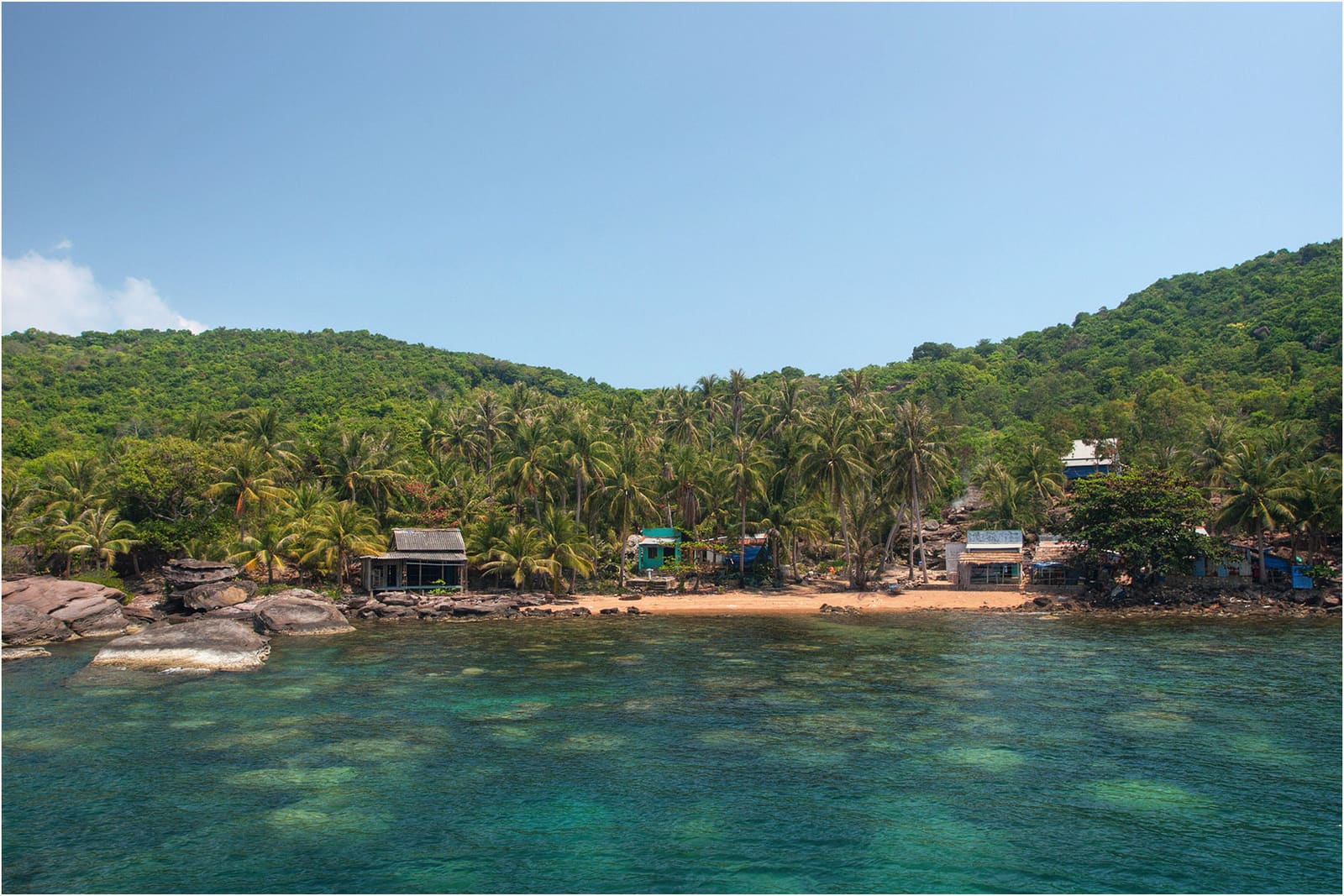
The south is the An Thoi archipelago, some fifteen islands off the southern tip of Phu Quoc. It has the most sites, from shallow reefs around the Mây Rút islands to the deep Pineapple Point site with currents, for experienced divers only. The north and north-west are better sheltered from the wind; there are fewer sites, but the diving is calmer. Snorkelling trips go there too. For beginners, centres usually choose shallow sites of 6–12 m.
How do I choose a centre and instructor?
Ask for the instructor's number and check it in PADI Pro Chek on padi.com, which shows whether their membership is current. SSI has a similar check on its website. Ask how many divers there are per instructor, whether the boat carries oxygen and a first-aid kit, and where the boat will go on the day. If it's your first dive, answer the medical form honestly: asthma, ear problems or blood pressure issues need a doctor's note. Make sure your insurance covers diving and medical evacuation.
What shouldn't I do underwater?
Phu Quoc is surrounded by a marine protected area of more than 40,000 hectares, which protects coral reefs, seagrass beds, turtles and dugongs (Vietnam News, June 2025). Don't touch or stand on coral, and don't take shells or coral from the seabed. Dive centres' rules say the same.
Frequently asked questions
When is the diving season on Phu Quoc? November to April. From May to September the sea around the southern islands is often rough and there is less diving.
Can I dive without a certificate? Yes, centres run try dives with an instructor at shallow sites. To dive on your own you need a certificate such as PADI Open Water.
Are there Russian-speaking instructors? Yes — according to their own pages and PADI's, all four centres in the directory have Russian-speaking instructors. When booking, ask who will go with your group.
Where can I snorkel? Around the An Thoi islands in the south and off the north-west coast, in calm weather. Many centres take snorkellers on their boats.
What if I feel unwell after a dive? Tell your instructor straight away and see a doctor. Don't fly for 24 hours after your last dive — that is standard diving advice.
Sources and checks
Season and areas are from the VietnamTravel and Local Vietnam guides (the latter updated 1 June 2026). Both name November to April as the season, that the south has more sites and the north is better sheltered. Both describe visibility as variable, and the figures differ between sources, so the text gives none. The marine protected area is from Vietnam News (15 June 2025). Checking an instructor is from the PADI Pro Chek page. Dive centres are from their directory listings, checked on 10–13 November 2026. Checked on 14 November 2026.